
Author: Ali A
In early February the World Health Organization said that travel bans were not necessary. On Feb. 17, just a month before the first U.S. lockdown, Dr. Anthony Fauci, the longtime director of the National Institute of Allergy and Infectious Diseases said that this new strain of coronavirus possessed “just minuscule” danger to the United States. In early March the U.S. surgeon general said that “masks are NOT effective in preventing the general public from catching coronavirus.” As late as March 9, the day Italy started its lockdown, Dr. Fauci did not encourage cancellation of “large gatherings in a place, even if you have community spread,” calling it “a judgment call.” NBA games were still being played.
However, the extent of the viral outbreak in China was grossly miscalculated, which led many scientists to believe that 2% to 5% of all infected patients would die.
The March 16 report by Imperial College epidemiologist Neil Ferguson is blamed for causing the U.K. to lock down and contributing to the domino effect of global lockdowns. The model has since come under intense criticism for being totally unreliable.
This is the same Neil Ferguson who in 2005 predicted 200 million could die from the bird flu. Total deaths over the last 15 years turned out to be 455. This is the same Neil Ferguson who in 2009 predicted that 65,000 people could die in the U.K. from the swine flu. The final number ended up around 392. Now, in 2020, he predicted that 500,000 British would die from coronavirus.

His deeply flawed model led the United States to fear over 2 million deaths and was used to justify locking down nearly the entire nation. His March 17 presentation to British elites on the dire need to take action ironically may have infected Boris Johnson and other top British officials, as Mr. Ferguson himself tested positive for COVID-19 two days later. Then in May he resigned in disgrace after he broke his own quarantine rules to meet clandestinely with a married woman.
In reality what happened was, in the face of a novel virus threat, China clamped down on its citizens. Academics used faulty information to build faulty models. Leaders relied on these faulty models. Dissenting views were suppressed. The media flamed fears and the world panicked.
That is the story of what may eventually be known as one of the biggest medical and economic blunders of all time.
To put things in perspective, lockdown for a virus that bears a survival rate of 99.99% if you are a healthy individual under 50 years old.
Yet we put billions of young healthy people under house arrest, stopped cancer screenings and other health tests in disarray, and sunk ourselves into the worst level of unemployment since the Great Depression, not to mention the economic meltdown in many countries.
There are those who say that we couldn’t have known these outcomes early on, so even if lockdowns were unjustified later they were still necessary early due to lack of information. That is plainly false. Italy’s alarming number of deaths fanned many of the early fears across the world, but by March 17 it was clear that the median age of Italian deaths was over 80 and that not a single person under 30 had died in that country. Furthermore, it was known that 99% of those who died had other existing illnesses.
A much more rational strategy would have been to lock down nursing homes and let young healthy people out to build immunity. Instead we did the opposite, we forced nursing homes to take COVID-19 patients and locked down young people.
Besides deaths, there were also doomsday projections about hospital capacity, but those models also proved to be grotesquely exaggerated. On March 29, Columbia University projected a need for 136,000 hospital beds in New York City. The maximum ever used was under 12,000. At peak, New York City still had around 1 in 6 hospital beds open and around 1 in 10 ICU beds open. Hospitals had capacity, both in New York City and in Sweden.
One of the lockdown argument is that it would have been even worse without such a step. Sweden never closed down borders, primary schools, restaurants, or businesses, and never mandated masks, yet 99.98% of all their people under 60 have survived and their hospitals were never overburdened. Sweden is the only Western country not to lock down its citizens. The only legal action officials took was to ban events that entail crowds larger than 50 people.
Sweden is thriving for long-term benefits but it is still better than the U.K., France, Spain, Italy, and Belgium. Sweden will also likely benefit from longer-term herd immunity, faster economic recovery, and fewer deaths from lockdown collateral damages.
The next question is why the delay in removing lockdowns and dragging of feet by politicians?
Is it only because they want to release lockdown in stages just to make sure Covid-19 is under control?
The answer might be because it would be highly embarrassing to force citizens to quarantine themselves only to later admit, it was all a colossal blunder, so it is easier for politicians and modelers to claim the lower death rates were based on the lockdowns themselves.
In the end claim it was a success!
Following are some of the world renowned professors and scientists have to say about Covid19
John P.A. Ioannidis of Stanford University School of Medicine
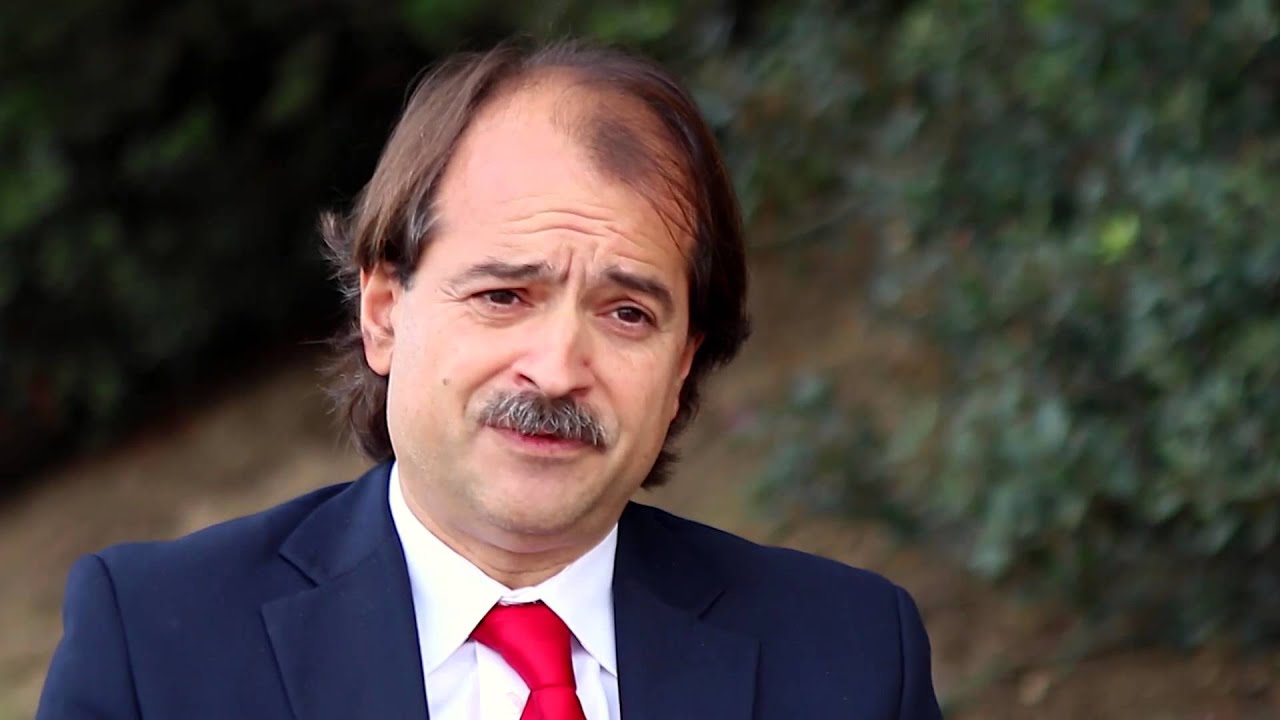
What John P.A. Ioannidis of Stanford University School of Medicine, who ranks among the world’s 100 most-cited scientists on Google Scholar. On that pivotal day of March 17 he released an essay titled “A fiasco in the making? As the coronavirus pandemic takes hold, we are making decisions without reliable data” — but it got little attention
Vaccines or affordable treatments take many months (or even years) to develop and test properly. Given such timelines, the consequences of long-term lockdowns are entirely unknown.
A population-wide case fatality rate of 0.05% is lower than seasonal influenza. If that is the true rate, locking down the world with potentially tremendous social and financial consequences may be totally irrational
A positive test for coronavirus does not mean necessarily that this virus is always primarily responsible for a patient’s demise. Yet if the health system does become overwhelmed, the majority of the extra deaths may not be due to coronavirus but to other common diseases and conditions such as heart attacks, strokes, trauma, bleeding, and the like that are not adequately treated.
If the level of the epidemic does overwhelm the health system and extreme measures have only modest effectiveness, then flattening the curve may make things worse: Instead of being overwhelmed during a short, acute phase, the health system will remain overwhelmed for a more protracted period.
Professor Johan Giesecke

Professor Johan Giesecke, one of the world’s most senior epidemiologists, advisor to the Swedish Government, the first Chief Scientist of the European Centre for Disease Prevention and Control, and an advisor to the director general of the WHO, have the following to say.
UK policy on lockdown and other European countries are not evidence-based. The correct policy is to protect the old and the frail only. This will eventually lead to herd immunity as a “by-product”.
The initial UK response, before the “180 degree U-turn”, was better. Imperial College paper was “not very good” and he has never seen an unpublished paper that have so much policy impact. The paper was very much too pessimistic. Any such models are a dubious basis for public policy anyway
The flattening of the curve is due to the most vulnerable dying first as much as the lockdown. The results will eventually be similar for all countries
At least 50% of the population of both the UK and Sweden will be shown to have already had the disease when mass antibody testing becomes available.
Covid-19 is a “mild disease” and similar to the flu, and it was the novelty of the disease that scared people. The actual fatality rate of Covid-19 probably will be in the region of 0.1%
Knut M. Wittkowski, PhD

Dr. Knut M. Wittkowski, PhD, ScD, headed the Department of Biostatistics, Epidemiology & Research Design at Rockefeller University for 20 years. He has put out a paper & gave an interview explaining the potential dangers of “social distancing.”
Reflect On: Are we responding to this pandemic the correct way? Is all of this necessary? Will social distancing and isolation cause a second wave next fall?
In the interview below, he goes into much more detail, answers many questions and touches upon multiple issues, and he also emphasizes that in the United States and in other countries, there will most likely be a ‘second wave’ of this new coronavirus because of social distancing and lockdown. In the interview he says letting younger people out and keeping everything normal will help the elderly. He says some safety measures should be put in place for the elderly but what we are doing right now, according to him, is more dangerous for the elderly.
This is what containment does, it causes the disease to stay longer in the population. If we prevented herd immunity from developing, it is almost guaranteed that we have a second wave as soon as either we stop the social distancing or the lockdown. A virus causing a respiratory disease is only eradicated if a certain percentage of the population becomes immune. In the absence of a vaccine, that means many people have to become “infected” and typically will experience no or only minor symptoms.
Dr. Scott Atlas, former chief of neuroradiology at Stanford University

The former chief of neuroradiology at Stanford University said the United States needs to end widespread coronavirus lockdowns and adopt a more targeted approach that both protects the most vulnerable people and builds immunity in the population.
Dr. Scott Atlas laid out some key facts he believes policymakers are ignoring about the pandemic, and called for leaders to “ignore the panic” when making decisions.
Reports show thousands of Americans have died, and Americans are now desperate for sensible policymakers who have the courage to ignore the panic and rely on facts,” Atlas wrote. Recording of deaths is inaccurate, deaths by Covid19 does not mean the person died of Covid19. He also pointed out that people are suffering and dying because hospitals have stopped procedures deemed nonessential, which can prevent the diagnoses of life-threatening illnesses and delay treatment for other conditions. “Leaders must examine accumulated data to see what has actually happened, rather than keep emphasizing hypothetical projections; combine that empirical evidence with fundamental principles of biology established for decades; and then thoughtfully restore the country to function.“
Atlas wrote that because the overall mortality rate is increasingly looking to be 0.1%-0.5% based on antibody studies, and because that mortality rate is even lower among healthy adults under the age of 50, it makes no sense to continue requiring all of the population to isolate when such a small percentage of people are in real danger from COVID-19.
Mass lockdowns are not only unnecessary, but they are actively delaying the process that must occur in order for things to return to normal, Atlas believes. Without a vaccine or proven treatment, the only way to get past the COVID-19 outbreak is to develop herd immunity.
In fact, infected people without severe illness are the immediately available vehicle for establishing widespread immunity. Extending whole-population isolation would directly prevent that widespread immunity from developing.”
Professor Michael Levitt

Professor Michael Levitt is a Professor of Structural Biology at the Stanford School of Medicine, and winner of the 2013 Nobel Prize for Chemistry for “the development of multiscale models for complex chemical systems.” He is a numbers genius.
He first spoke out in early February, when through analysing the numbers of cases and deaths in Hubei province he predicted with remarkable accuracy that the epidemic in that province would top out at around 3,250 deaths.
His observation is a simple one: that in outbreak after outbreak of this disease, a similar mathematical pattern is observable regardless of government interventions. After around a two week exponential growth of cases growth starts slowing down and the curve quickly becomes “sub-exponential”.
The ‘unmitigated’ scenarios modelled by Imperial College, and which tilted governments across the world into drastic action, relied on a presumption of continued exponential growth — that with a consistent R number of significantly above 1 and a consistent death rate, very quickly the majority of the population would be infected and huge numbers of deaths would be recorded. But Professor Levitt’s point is that that hasn’t actually happened anywhere, even in countries that have been relatively lax in their responses.
He describes indiscriminate lockdown measures as “a huge mistake,” and advocates a “smart lockdown” policy, focused on more effective measures, focused on protecting elderly people.
I think the policy of herd immunity is the right policy. I think Britain was on exactly the right track before they were fed wrong numbers. And they made a huge mistake. I see the standout winners as Germany and Sweden. They didn’t practice too much lockdown and they got enough people sick to get some herd immunity. I see the standout losers as countries like Austria, Australia and Israel that had very strict lockdown but didn’t have many cases. They have damaged their economies, caused massive social damage, damaged the educational year of their children, but not obtained any herd immunity.
“There is no doubt in my mind, that when we come to look back on this, the damage done by lockdown will exceed any saving of lives by a huge factor.
Camilla Stoltenberg, Director of Norway’s public

Norway is assembling a picture of what happened before lockdown and its latest discovery is pretty significant. It is using observed data – hospital figures, infection numbers and so on – to construct a picture of what was happening in March. At the time, no one really knew. It was feared that virus was rampant with each person infecting two or three others – and only lockdown could get this exponential growth rate (the so-called R number) down to a safe level of 1. This was the hypothesis advanced in various graphs by Imperial College London for Britain, Norway and several European countries
But the Norwegian public health authority has published a report with a striking conclusion: the virus was never spreading as fast as had been feared and was already on the way out when lockdown was ordered. ‘It looks as if the effective reproduction rate had already dropped to around 1.1 when the most comprehensive measures were implemented on 12 March, and that there would not be much to push it down below 1… We have seen in retrospect that the infection was on its way down.
This raises an awkward question: was lockdown necessary? What did it achieve that could not have been achieved by voluntary social distancing?
Norway’s statistics agency was also the first in the world to calculate the permanent damage inflicted by school closures: every week of classroom education denied to students, it found, stymies life chances and permanently lowers earnings potential. So a country should only enforce this draconian measure if it is sure that the academic foundation for lockdown was sound. And in Stoltenberg’s opinion, ‘the academic foundation was not good enough’ for lockdown this time.
Links to the above info
1. John P.A. Ioannidis
Info taken from John P.A. Ioannidis article below
2. Knut M. Wittkowski, PhD
3. Professor Johan Giesecke
4. Camilla Stoltenberg, Director of Norway’s public
5. Professor Michael Levitt
6. Dr. Scott Atlas, former chief of neuroradiology at Stanford University
7. How Fear, Groupthink Drove Unnecessary Global Lockdowns
By Yinon Weiss
8. UNICEF health chief warns ‘indiscriminate lockdowns’ could cause more harm in poorer nations
By Rebecca Klar – 05/14/20https://thehill.com/policy/healthcare/497741-unicef-chief-warns-indiscriminate-lockdowns-could-cause-more-harm
 އަމިއްލަ ޞިއްޙަތު